
Mine Island gives members a simple grid where each selected tile can reveal a multiplier or end the active round. Available through 616JILI, the title uses clear controls, quick decisions, and account displays in PHP or USD. This guide is written for players who need accurate rules, useful control guidance, and a clear method for reading each result before making another selection.
How Mine Island works within the 616JILI lobby
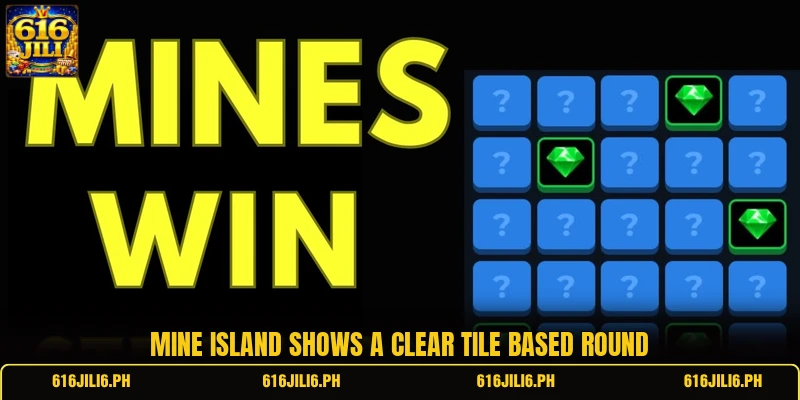
The main screen presents a covered grid, a stake field, a mine setting, and buttons for starting or collecting a round. In Mine Island, every safe reveal changes the displayed return, while a hidden mine closes the attempt and removes the unsettled amount. The official developer describes the title as a tile-based instant-win game built around uncovering multipliers while avoiding mines.
Members can usually review the chosen wager, selected mine count, current multiplier, and possible payout before opening another square. A PHP 100 stake or USD 2 stake remains unchanged during that round, but the shown return may rise after each safe tile. Mine Island therefore depends on reading the active display correctly rather than waiting for reels, paylines, or symbol combinations.
Core rules behind each tile selection round
Each attempt starts with settings that determine the value placed and the amount of hidden risk across the board. Players then open covered squares individually, checking the updated return after every safe result before choosing another action.
Starting a Mine Island round
First, enter a stake in the available field and confirm that the account currency is shown as PHP or USD. Next, choose the mine setting offered by the interface, because that selection changes how many losing tiles remain hidden. Finally, press the start control only after checking both entries, since they become active once the grid is opened.
The covered board then becomes available for selection, and each square keeps the same appearance until a player clicks it. A safe result normally reveals value information and updates the current return shown near the collect control. A mine ends the attempt immediately, so no unsettled payout from that round remains available afterward.
Reading safe tile results
A safe tile does not complete the round unless the member chooses to collect the displayed amount. Instead, the board stays active, remaining squares stay covered, and the multiplier adjusts according to the current setup. Players should read the new figure before selecting again, because later choices are based on the updated position rather than the opening stake.
For example, a PHP 200 entry multiplied by 1.40 produces a displayed value of PHP 280 before any platform deductions or rules apply. A USD 5 entry at 1.60 shows USD 8 under the same basic calculation. In Mine Island, these examples explain the screen math only and do not promise that either multiplier will appear during a specific attempt.
Knowing when a round ends
A round closes in one of two ways: the member collects an available return, or a selected square reveals a mine. Using collect confirms the current displayed value and stops further tile choices for that board. Revealing a mine removes the active opportunity, displays the losing positions, and prepares the interface for a new attempt.
View more: Limbo – Clear Rules And Simple Multiplier Gameplay
Some versions may also finish after every safe square has been opened, although the exact board settings should be checked inside the lobby. Mine Island records the result immediately, so players should wait for the balance and history fields to refresh before starting again. This short pause also helps confirm whether the previous action was accepted by the system.

Better ways to interpret multipliers and controls
Useful play comes from understanding what the screen is showing, how settings change the board, and which button completes an active attempt. These methods focus on interface accuracy rather than general advice that does not explain the actual game.
Compare mine configurations carefully
A higher mine count usually leaves more losing squares under the covered grid, while a lower count leaves fewer such positions. The interface may respond by changing the multiplier path, so players should compare displayed values before pressing start. This comparison should be made on the actual board because available configurations can differ by device, currency, or lobby version.
Members can test several settings with the smallest accepted stake to see how the return changes after one safe tile. For instance, PHP and USD accounts may show different stake increments even when the game structure remains identical. Mine Island should be judged through its visible numbers, not through screenshots or claims copied from unrelated websites.
Use the gather control correctly
The collect button is active only while a valid return remains available from safe selections on the current board. Pressing it ends the attempt, credits the confirmed amount according to platform processing, and prevents any further reveal. Mine Island players should avoid double tapping because a delayed connection can make repeated input confusing on smaller mobile screens.
Before collecting, read the stake, multiplier, and projected return as three separate fields instead of treating them as one figure. A PHP 150 stake at 1.30 equals PHP 195, while USD 3 at 1.50 equals USD 4.50. These simple checks help members notice display errors, currency mistakes, or an unintended stake before the next round begins.
Review history following each result
The history panel can show whether an attempt ended through collection or through a mine, depending on the available interface design. It may also list the opening stake, final multiplier, payout, time, and status for recent activity. Players can use those records to confirm that screen results match balance movements without relying on memory.
When Mine Island loads after a weak connection, the history area may be more reliable than an animation that stopped midway. Members should refresh only after checking whether the result already appears, because repeated actions can create uncertainty about the active state. If figures do not match, the round identifier and timestamp provide useful details for customer support.
View more Category: Arcade
Conclusion
Mine Island is a direct tile game where every round depends on selecting covered squares, reading the multiplier, and collecting before a mine appears. At 616JILI, members can check PHP or USD stakes, confirm each setting, and review completed results through the available account tools. Register, open the game on the app, follow the displayed rules, and good luck with every new board.